
At Indasco, every certificate is more than a document – it is a statement of our unwavering commitment to quality, safety, and environmental responsibility. By meeting the world’s most recognized standards, we ensure that our products not only serve today’s needs but also build trust for the future. Each certification marks another milestone in our journey toward innovation, reliability, and a sustainable industrial vision.
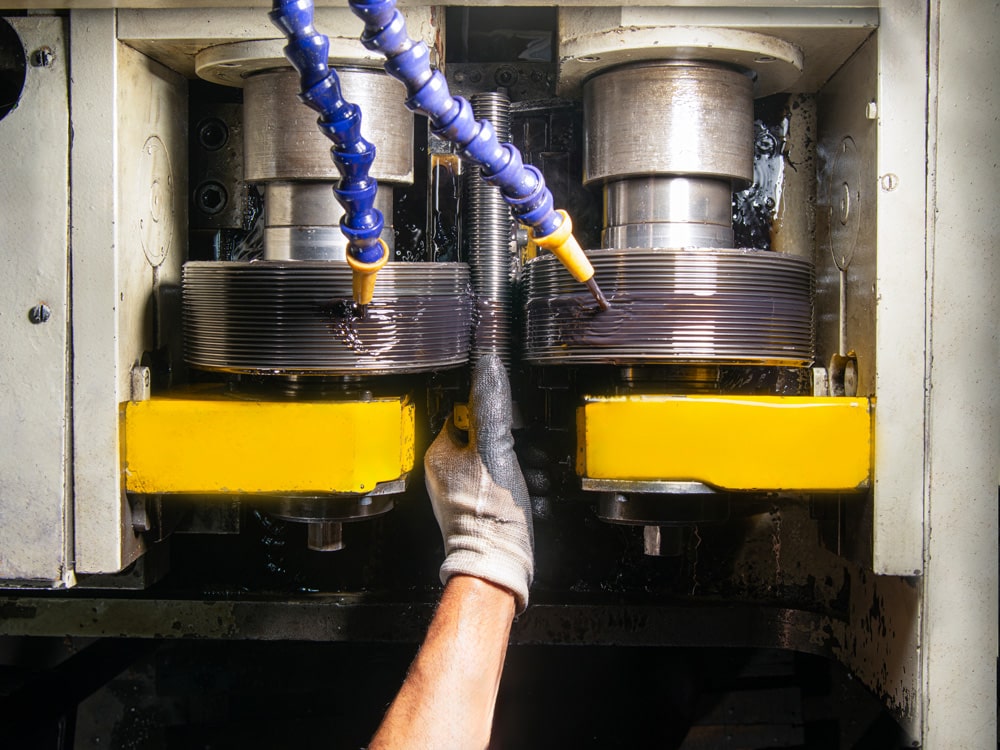
Every fastener we produce leaves the line with a surface treatment chosen for the environment it will live in. Choosing that treatment is not a cosmetic decision: in marine, petrochemical and buried applications the coating, not the base steel, is what sets the service life of the joint.
Immersion in molten zinc builds a thick, metallurgically bonded layer that protects the steel both as a barrier and sacrificially — the zinc corrodes first and the steel underneath stays intact even where the layer is scratched. It is the default choice for structural bolts, foundation bolts and anything exposed to weather for decades. The trade-off is dimensional: the thread must be cut or tapped with the coating thickness allowed for, which is why galvanized nuts are over-tapped.
A thin zinc-and-aluminium flake coating applied and then cured, Dacromet reaches high salt-spray resistance at a fraction of the thickness of hot-dip. Because it adds so little to the thread profile it suits fine-pitch and high-strength fasteners where tolerances are tight, and it carries no risk of hydrogen embrittlement — the reason it is often specified for grade 10.9 and 12.9 parts.
Where the problem is not only corrosion but friction, a PTFE top layer gives a consistent, low and repeatable torque-tension relationship. That matters on joints that are tightened to a specified preload, and on assemblies that must come apart again after years in service without galling or seizing.
Black oxide adds almost nothing dimensionally and gives mild corrosion resistance once oiled. It belongs indoors: machine building, tooling, enclosed assemblies — anywhere appearance and dimensional accuracy matter more than long outdoor exposure.
In practice the decision comes down to four questions. How aggressive is the environment? How tight are the thread tolerances? What strength class is the fastener? And does the joint need a controlled, repeatable torque? Answer those and the coating usually chooses itself. When a project sits between two answers, our engineering team will review the drawing and the operating conditions with you before anything goes into production.
Our news coverage section keeps you up to date with the latest developments shaping the fastener industry and beyond. From technological advancements and market insights to corporate announcements and industry trends, each update is crafted to deliver clear, reliable, and relevant information. By sharing timely news, we ensure our audience remains connected to the innovations, strategies, and milestones that define our journey. Explore these stories to gain a deeper understanding of how we continue to lead with quality, precision, and trust across global markets.
In this section, you can explore a collection of news and event highlights that reflect our ongoing journey of growth and innovation. From industry gatherings and product launches to corporate achievements and partnerships, each gallery showcases moments that matter. Designed to keep our audience informed and engaged, these updates offer a closer look at the milestones that shape our path forward and strengthen our presence across global markets.